- CONTACT US
- AFS
- Business
- Bussiness
- Car
- Career
- Celebrity
- Digital Products
- Education
- Entertainment
- Fashion
- Film
- Food
- Games
- General Health
- Health
- Health Awareness
- Healthy
- Healthy Lifestyle
- History Facts
- Household Appliances
- Internet
- Investment
- Law
- Lifestyle
- Loans&Mortgages
- Luxury Life Style
- movie
- Music
- Nature
- News
- Opinion
- panorama
- Pet
- Plant
- Politics
- promis
- Recommends
- Science
- Self-care
- services
- Smart Phone
- sport
- Sports
- Style
- Technology
- tire
- Travel
- US
- World

When you buy through links on our articles, Future and its syndication partners may earn a commission.

On Episode 189 of This Week In Space, Rod Pyle and Tariq Malik talk with their favorite Newspace Buccaneer, Jeffrey Manber.
When so many people were touting their private spaceflight dreams in the 1980s, Manber took the next enormous stride and actually made it happen. He formed the Office of Space Commerce within the US Department of Commerce at the invitation of the Reagan administration, forged the first commercial relations with the then-Soviet Union, bridged that into the post-USSR period, and was responsible for the first commercial spaceflight to the then-mothballed Soviet-era Mir space station with a crew that stayed there for 70 days.
He then went on to develop a variety of commercial space enterprises, from the first commercial platform to release smallsats from the ISS to initiating the Bishop airlock that became part of the space station. He also started Nanoracks, the first privately developed and standardized satellite deployment mechanism to fly. Finally, he initiated Starlab, the private space station currently under development by Voyager Technologies and a consortium of aerospace companies.
Join us for this very special episode with one of the key founders of NewSpace!
Download or subscribe to this show at: https://twit.tv/shows/this-week-in-space.
Get episodes ad-free with Club TWiT at https://twit.tv/clubtwit
Space news of the week
Model Falcon 9!
TOP TELESCOPE PICK:
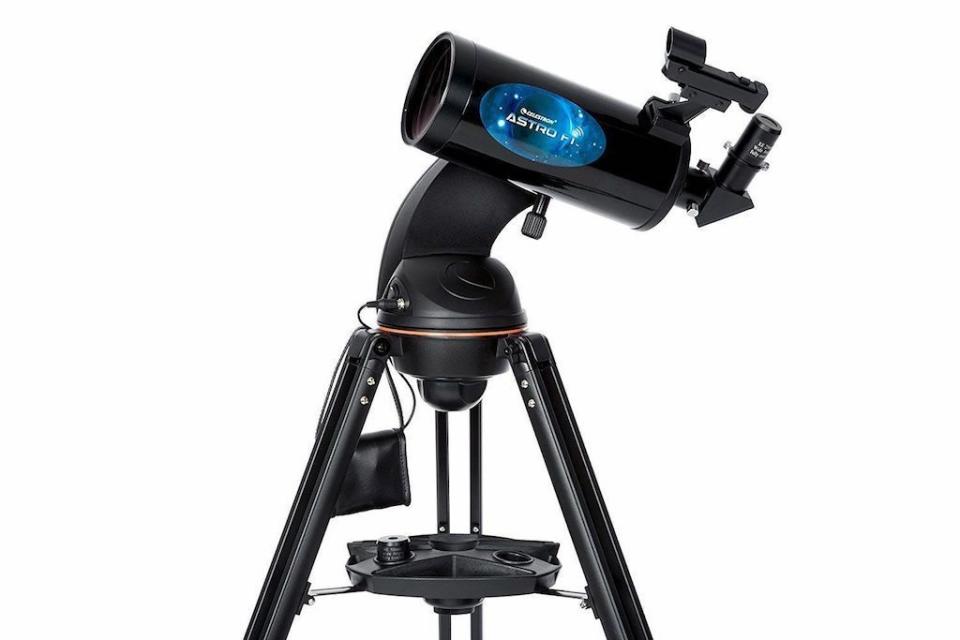
Looking for a telescope to see planets and comets? We recommend the Celestron Astro Fi 102 as the top pick in our best beginner's telescope guide.
Finally, did you know you can launch your own SpaceX rocket? Model rocket maker Estes' stunning scale model of a Falcon 9 rocket that you can pick up now. The launchable model is a detailed recreation of the Falcon 9 and retails for $149.99. You can save 10% by using the code IN-COLLECTSPACE at checkout, courtesy of our partners collectSPACE.com.
About This Week In Space
This Week in Space covers the new space age. Every Friday we take a deep dive into a fascinating topic. What's happening with the new race to the moon and other planets? When will SpaceX really send people to Mars?
Join Rod Pyle and Tariq Malik from Space.com as they tackle those questions and more each week on Friday afternoons. You can subscribe today on your favorite podcatcher.
LATEST POSTS
- 1
 Eating Brie, Gouda, cheddar may lower dementia risk, new study says
 - 2What is the 'Survivor 50' Challenge? Hidden immunity idols will be up for grabs in every U.S. state.
- 3Kate Middleton and Prince William unveil annual family Christmas card photo with George, Charlotte and Louis
- 4Tributes pour in for MIT professor Nuno Loureiro amid unresolved shooting case
- 5Interstellar comet 3I/ATLAS to pass closest to Earth on Friday


- Understanding climate change in America: Skepticism, dogmatism and personal experience
- Scientists detect X-ray glow from interstellar comet 3I/ATLAS extending 250,000 miles into space
- Hubble Space Telescope spies dusty debris from two cosmic collisions
- Interstellar comet 3I/ATLAS to pass closest to Earth on Friday
- Watch interstellar comet 3I/ATLAS make its closest approach to Earth in free livestream on Dec. 18
- Saturn's moon Titan may not have a buried ocean as long suspected, new study suggests
- Surprise! Saturn's huge moon Titan may not have a buried ocean after all
- Why this Iranian island looks like Mars after it rains
- As reefs vanish, assisted coral fertilization offers hope in the Dominican Republic
- The next frontier in space is closer than you think – welcome to the world of very low Earth orbit satellites


